
We Star With Permits, Not With Power
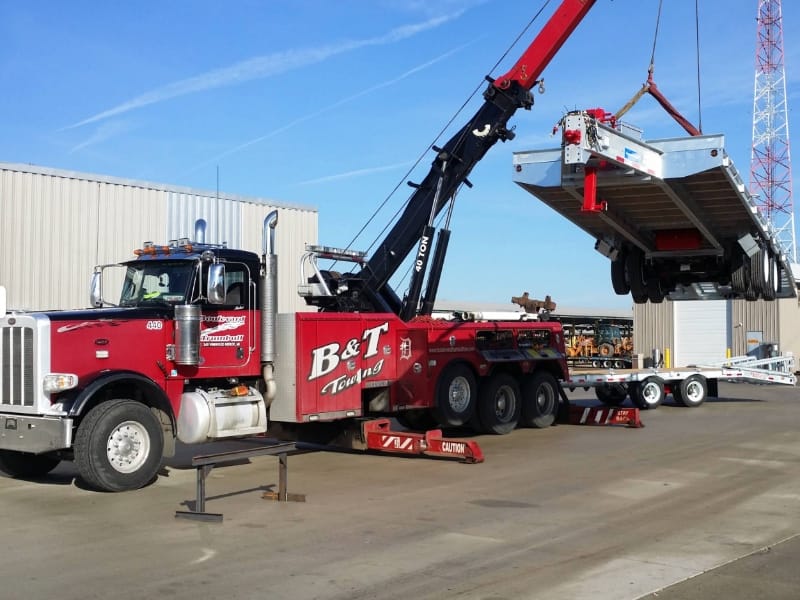
When you see a wide-load convoy rolling down the highway, it’s easy to assume someone loaded up a trailer and hit the road. The reality behind I-75 heavy towing and heavy transport is considerably more involved. Time spent on coordination, multiple permits, and a detailed route survey often precede the actual move. Here’s what that planning actually involves.
The Paperwork That Has to Come First
State Permits and Routing Approval
Every state a heavy load crosses requires its own oversize/overweight permit. These permits specify approved routes, travel windows, and speed restrictions, and each state sets its own rules. Michigan, Ohio, Kentucky, Tennessee, and Georgia all have different requirements for loads moving along the I-75 corridor. Getting permits from multiple states for a single move is a coordination task on its own.
Load Classifications and What They Trigger
Loads are classified by their dimensions and weight relative to legal limits. Once a load exceeds certain thresholds, say 14 feet wide or 15 feet tall, additional requirements kick in: pilot cars, escort vehicles, law enforcement escorts, or overnight-only travel windows. Superloads, those exceeding the heaviest oversize thresholds, require engineering sign-off and detailed route surveys before any state issues a permit. The classification a load receives early in planning shapes everything that follows.
The Route Survey
Routing an oversized load is more than choosing the fastest highway. The planning crew has to identify every potential obstruction along the proposed path: bridge clearances, overhead utility lines, tight interchange ramps, low underpasses, and road surfaces that may not handle the axle weight. A load that’s 16 feet wide needs more than a wide lane; it needs a route where nothing has to be moved or temporarily relocated.
Some of that prep work involves coordinating with utility companies to lift power lines. Some means scheduling around construction zones or traffic volumes. For I-75 heavy towing jobs that pass through urban stretches, the window for moving a wide load can be as narrow as a few hours on a weekend night. The route survey is where the real complexity of a transport job comes into focus, and where a smooth move gets separated from a costly delay.
Pilot Cars, Escort Requirements, and Travel Windows
Once routing is approved and permits are in hand, the move still has to be staffed and timed. Most oversize loads require at least one pilot car, a lead vehicle that alerts traffic ahead of the approaching load. Depending on the load’s dimensions and the states being crossed, a rear escort or law enforcement presence may also be required as part of the permit conditions.
Travel windows add another planning layer. Many states restrict oversize loads from moving during peak commute hours, around holidays, or after dark on certain road types. Here are common travel restrictions that apply to I-75 heavy towing moves on this corridor:
- No movement during morning and afternoon peak hours in urban areas
- Restricted travel during holiday weekends, typically a 72-hour blackout
- Some states limit the widest loads to sunrise-to-sunset windows only
- Nighttime moves may be required for certain bridge crossings or urban segments
- Weather holds can be imposed on crane loads or high-profile trailers
Coordinating pilot car crews, aligning travel windows across state lines, and keeping the customer updated on timing changes is part of every oversized transport job, regardless of load size.
Boulevard & Trumbull Towing: Built for the Demands of I-75 Heavy Towing
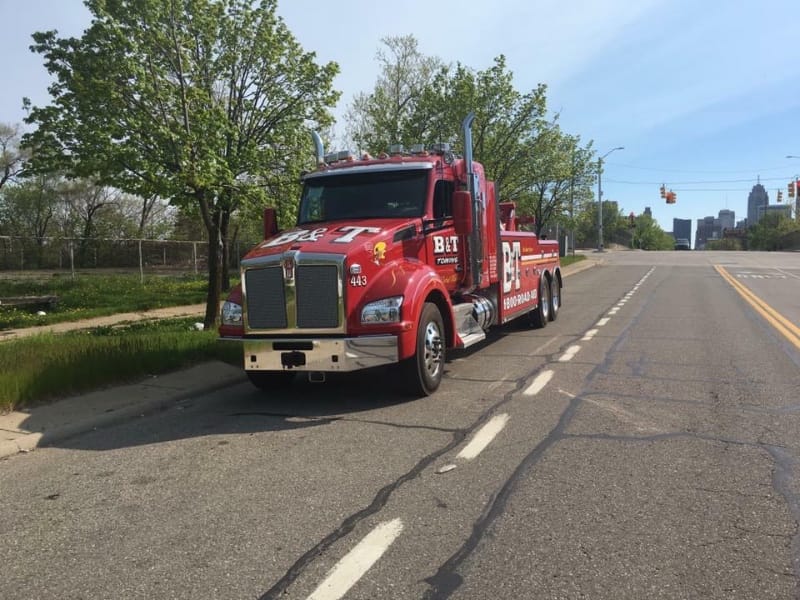
Boulevard & Trumbull Towing handles I-75 heavy towing and oversized transport from the first permit application through final delivery. Our I-75 heavy towing team manages the route surveys, coordinates with state agencies, lines up pilot cars, and keeps the job on track when conditions change. We’ve worked this corridor long enough to know where delays tend to develop and how to plan around them before they become problems.
All of that planning applies to every transport we take on, regardless of size. When Boulevard & Trumbull Towing takes on an I-75 heavy towing job, the prep work starts before the truck does. We handle permit applications, route coordination, and pilot car scheduling, and we stay in communication from first call through final drop.
FAQ
What is a superload?
A superload is a vehicle and load combination that exceeds standard oversize permit thresholds. The exact dimensions vary by state, but superloads typically require engineering analysis of bridges and road surfaces along the route, custom permit applications, and coordination with multiple agencies before movement is approved.
How far in advance do permits need to be arranged for an oversized transport?
Lead times vary depending on the number of states involved and the complexity of the load. A single-state move with a standard oversize load may be permitted in a few days. Multi-state moves, especially those involving superloads, can require weeks of coordination with highway departments, utility companies, and law enforcement.
Do all oversized loads require pilot cars?
Not all of them, but most do. Pilot car requirements depend on the load’s width, height, and sometimes weight. States set their own thresholds, so a load that needs one pilot car in one state may require two in the next. Some moves also require law enforcement escorts in urban areas or through school zones.
What happens if an oversized transport encounters an unexpected road closure?
The transport has to stop. An oversized load cannot simply take an alternate route; any deviation from the permitted path requires a new permit or a permit amendment. The carrier coordinates with the permitting agency and, if needed, reroutes the move with updated approvals before proceeding.
Why are travel windows restricted for oversized loads?
States restrict movement during high-traffic periods to reduce risk to other drivers and to prevent major backups. Holiday weekends, peak commute hours, and school hours are common blackout periods. Some restrictions also protect infrastructure, since certain bridges and interchanges have weight or clearance limits that only support a controlled crossing.
Who is responsible if an oversized load damages infrastructure during transport?
The carrier typically carries liability coverage that addresses infrastructure damage, and permit conditions often require proof of that coverage before a permit is issued. Responsibility depends on the specifics of the incident, the permit conditions, and applicable state law. Any infrastructure contact should be reported immediately and documented thoroughly.