
Speed, Cargo, and Physics
Rollovers are impactful events: traffic backed up for miles, flashing lights ahead, and a tractor trailer lying on its side in the median or on the shoulder. It looks dramatic from a passing car and serious from inside another rig. As a company that runs I-94 semi towing recoveries, we see what happens after the dust settles.
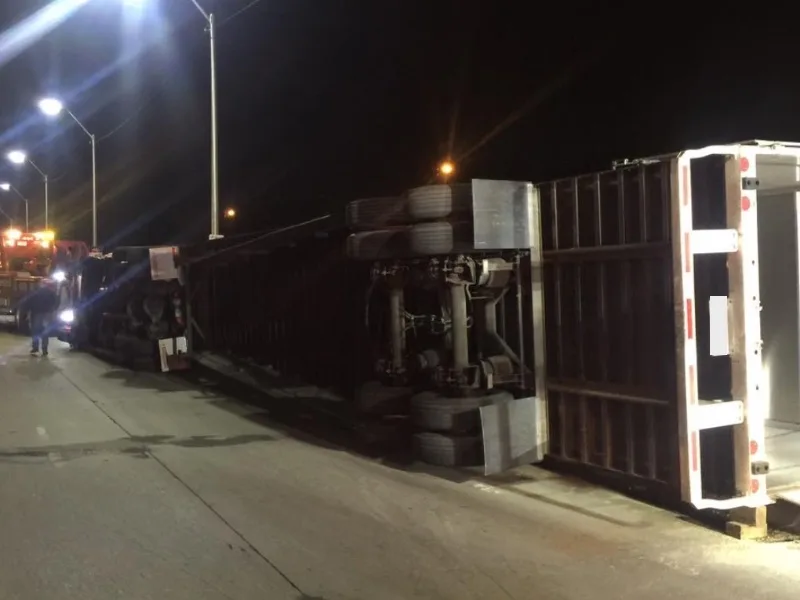
The Most Common Causes
Most rollovers begin with a chain of small mistakes that stack up over a few miles or a few seconds, rather than one big error. A driver who has not slept enough, a curve that comes up faster than expected, a load that shifted at the last stop, and a steering correction made in a hurry can put a rig on its side before the driver registers what changed.
The single biggest factor in a tractor trailer rollover is speed in a curve. Off-ramps, cloverleafs, and tight bends are designed for cars, not for an 80,000-pound vehicle with a high center of gravity. A truck taking a posted 35 mph ramp at 45 mph is already past the margin most rigs can hold.
Other Factors That Stack the Deck
Beyond speed, several conditions raise the rollover risk on any given trip:
- Cargo loaded too high or stacked unevenly
- Tankers carrying partial liquid loads that slosh in the trailer
- Tire pressure or tread wear that reduces grip in turns
- Sudden lane changes to avoid debris, animals, or a slowing vehicle
- High winds across open stretches of highway
- Wet, icy, or snow-packed surfaces on ramps and exits
Any single factor is manageable on its own, with rollover risk climbing fast once two or three stack up at the same moment. Pre-trip inspections, route planning, and slowing down well before exits are the cheapest insurance available to any fleet.
What Prevention Actually Looks Like
Prevention starts with a load that is not pushing limits. Cargo packed low, balanced from front to back, and strapped firmly in place behaves better in every condition, and drivers who confirm their straps and check axle weights before leaving a yard cut their rollover risk significantly.
The other half is in the driver’s seat, where reading curves early, easing into turns, and resisting the urge to correct hard when something cuts in front of the rig keeps a truck planted. We have responded to plenty of I-94 semi towing calls where a small lift on the steering wheel would have changed the outcome entirely.
How a Rollover Recovery Plays Out
Once a truck ends up on its side, the recovery is its own kind of operation. An I-94 semi towing rollover call usually involves rotators, airbags, and several hours of careful work to right the rig without adding damage to the cargo or the road surface. Coordinating with state police, DOT, and the carrier is part of the process from the moment we arrive on scene.
A good I-94 semi towing crew works to keep the lane closure as short as possible while still putting safety first. The goal is to move the rig, recover the freight, and get traffic flowing again. Every minute counts once traffic is stacked up behind the scene.
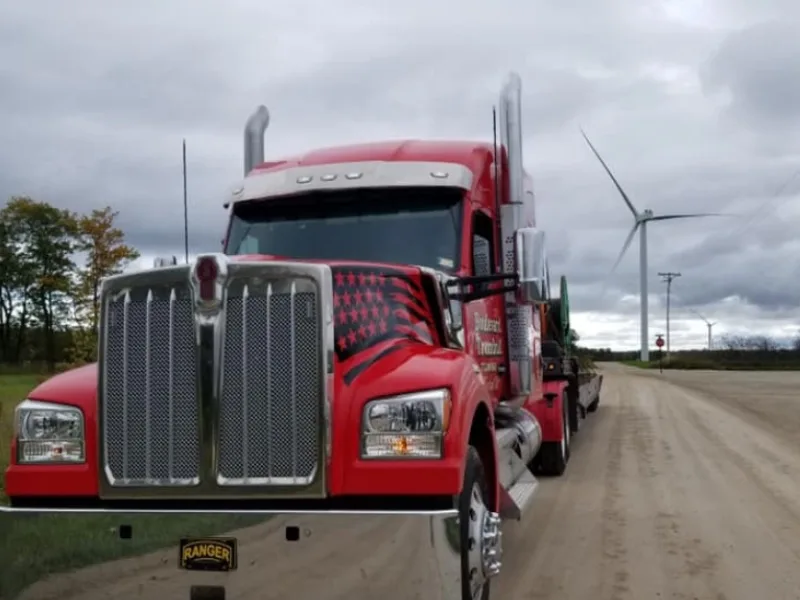
Boulevard and Trumbull Towing on the I-94 Semi Towing Calls That Matter
At Boulevard and Trumbull Towing, we have built our reputation on I-94 semi towing work that the average shop is not equipped for. Rollovers, jackknifes, off-road recoveries, and disabled rigs are part of what we handle every week, and we take every call as the high-stakes job it is.
Our drivers, dispatchers, and recovery specialists work as a single unit so the right equipment shows up the first time. If your fleet runs the I-94 corridor and you want an I-94 semi towing partner who picks up fast, we are ready for that call.
FAQs
What should a driver do in the seconds after a rollover?
If conscious and able to move, stay belted in until the cab stops settling. Once movement stops, assess for fuel leaks or smoke, call 911, and exit through the upward facing door if it is safe to do so. Stay clear of the rig and away from traffic until first responders arrive.
How long does a typical tractor trailer rollover recovery take?
Most full recoveries run between three and eight hours, depending on the cargo, the position of the rig, and traffic conditions. Recoveries that involve hazardous material, full tankers, or a rig wedged into a guardrail can extend much longer. The recovery team will give an estimate once they have eyes on the scene.
Is the cargo usually salvageable after a rollover?
That depends on what the trailer was carrying and how the rig landed. Boxed dry goods often survive surprisingly well if the trailer stayed sealed, while liquids, perishables, and fragile freight rarely make it through. The recovery crew works with the carrier to triage the load before reloading or scrapping it.
Who pays for the recovery and the lane closure response?
The carrier or its insurance handles the recovery bill in most cases, along with any damage to public infrastructure like guardrails or signs. State police and DOT response is funded separately. Costs vary widely with the complexity of the recovery and the cargo type.
Are some semi trucks more rollover prone than others?
Yes. Tankers, car haulers, double trailers, and any rig with a tall or top-heavy load carry a higher rollover risk than a flatbed or a low-profile dry van. Trailer length, suspension setup, and tire condition also play a role in how a rig handles in a curve.
What should other drivers do as they come up on a rollover scene?
Slow down well before the scene, signal early, and move over a lane if possible. Keep your eyes forward and avoid rubbernecking, which causes secondary crashes. Follow flagger and trooper directions, and never stop on the shoulder unless directed to do so by an officer.