
A Tire Call That Becomes Something Else
A steer tire failure on westbound I-96 near the Davison exit. Such incidents can happen anytime. They get complicated, when the driver thinks he needs a tire change and can get back on the road. We pull up and find the fender pushed back into the wheel well and the air line torn loose from the fitting. That truck is not rolling anywhere without I-96 semi towing.
A blown tire on a loaded semi can wreck more than the tire itself. Shredded rubber flies into brake lines, electrical wiring, fuel tank brackets, suspension mounts, and mudflaps. If the truck cannot hold air, the brakes may not release. If the rim is bent or the fender is jammed into the wheel, a roadside tire swap will not solve anything.
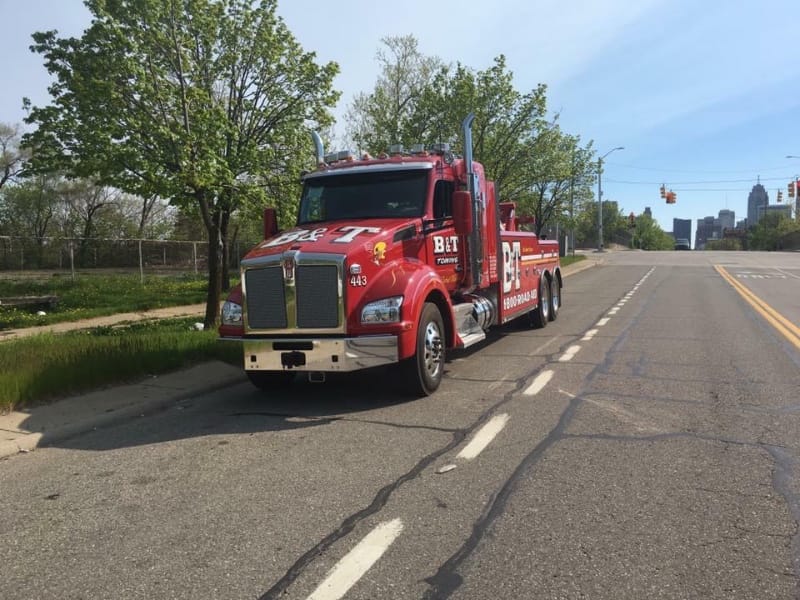
When Roadside Tire Service Works and When It Does Not
A clean tire failure on a stable shoulder with plenty of room can usually be handled with a service truck. The tech needs space to set a jack, room to work without standing in traffic, and a truck that can still move once the new tire is mounted. Drive tire blowouts on wide shoulders sometimes fit that description.
The problem is when the shoulder is narrow, the truck is tilted into gravel, or the damage spread beyond the tire. We have pulled trucks where a steer tire failure bent the fender so far back that the wheel would not turn. We have seen drive tire blowouts rip air fittings off the frame rail. At that point, the tire is the least of the issues.
The Questions We Ask Before Anything Moves
After a tire blows, we check air pressure and brake function first. If the truck cannot build or hold air, the brakes may not release properly. A driver who tries to limp the truck to the next exit with a leaking line can lock a wheel, ruin a rim, or start a fire.
We need clear answers before we decide on the next step:
- Which tire failed and what else got hit?
- Can the truck build air and release the brakes?
- Is the suspension or steering damaged?
- Is the trailer loaded or empty?
- How much shoulder is available?
- Where does the fleet want the unit delivered?
Damage That Forces a Tow Instead of a Tire Change
I-96 semi towing makes sense when the truck cannot move safely under its own power. That might be a bent rim, a leaking air line, a locked brake, broken suspension, or damaged steering. A loaded trailer sitting partly in the travel lane makes the call more urgent because the truck has to leave without creating another hazard. The setup depends on what failed and where the truck is sitting. Some calls need a tractor-only tow.
Air Loss and Brake Damage After a Tire Fails
Air loss is one of the most common problems our I-96 semi towing team sees after a tire blows. Rubber can tear into air lines, fittings, or glad hands. If the truck cannot hold pressure, the brakes may not release or may lock up when the driver tries to move. A truck with brake damage should not be driven, even a short distance.
Suspension Trouble After a Blowout
Suspension damage can happen when a tire shreds and the rim drops onto the axle or frame. Steering damage usually shows up after a steer tire fails and the driver tries to control the truck while the wheel is grinding into the fender. Either problem can make the truck unsafe to tow without extra care during the hookup.
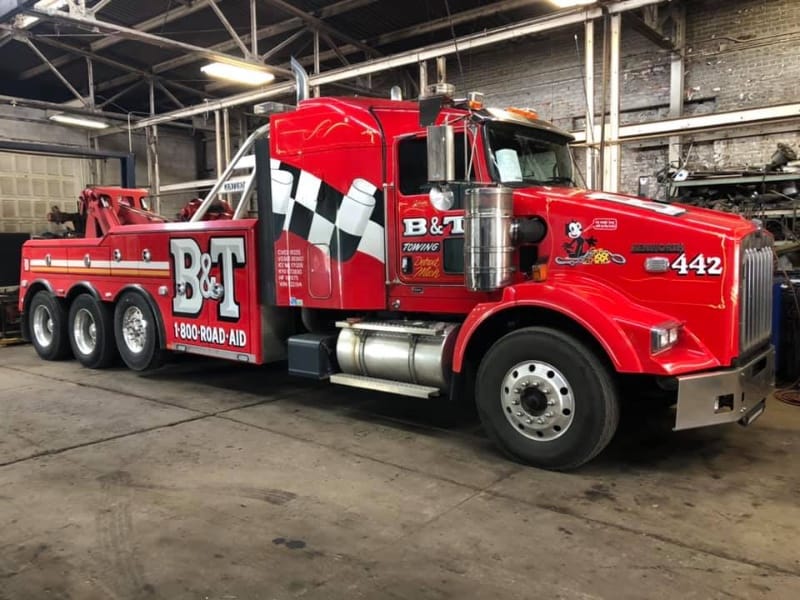
Boulevard & Trumbull Towing Handles I-96 Semi Towing When Tire Damage Spreads
Boulevard & Trumbull Towing has been running calls in Metro Detroit since 1979. Our fleet covers Wayne, Oakland, and Macomb counties with I-96 semi towing operators, in-house dispatch, and equipment for light, medium, and heavy-duty work. Every I-96 semi towing operator holds a National TIM Training Certificate and we follow strict hiring standards that include background checks and drug testing.
When a tire blowout turns into air loss, brake damage, or suspension trouble, our dispatchers ask the right questions before sending a truck. I-96 semi towing after a tire failure starts with the tire, but the real work is checking road position, cargo, damage, and destination so the driver gets off the shoulder with a plan that makes sense.
FAQs
Can a semi tire blowout damage the air brakes?
Yes. Shredded rubber can tear air lines, fittings, brake chambers, and nearby hoses. If the truck cannot build or hold air, the brakes may not release correctly.
When is a tire change not enough for a semi?
A tire change is not enough if the rim is bent, the fender is jammed, air is leaking, or the steering feels damaged. The truck may need to be moved before repairs can start.
What should a driver avoid after a tire failure?
Do not keep driving on a damaged rim or dragging brake parts. Even a short move can ruin hubs, drums, wiring, and suspension pieces.
Why does shoulder space matter during a semi breakdown?
A wide shoulder gives the crew room to work and position equipment. A narrow shoulder near traffic may make roadside service too risky.
Can suspension damage happen after a tire blows?
Yes. A tire can shred hard enough to damage mounts, brackets, springs, or nearby frame parts. A dropped rim can also put extra stress on the axle area.
What details help dispatch after a semi tire failure?
Share the nearest marker, travel direction, failed tire position, trailer type, load status, and visible damage. Photos of the wheel area help the crew prepare.