
The Job Starts Before The Hookup
Heavy trucks do not get moved the same way passenger cars do, especially around Detroit’s older docks, freeway ramps, and industrial lots. One bad turn can turn a delivery into a recovery.
A loaded tractor-trailer sat crooked near a dock off Livernois after the driver cut the turn too tight and dropped the landing gear onto broken concrete. The trailer was still loaded, the dock lane was narrow, and traffic kept squeezing past the entrance. That is the kind of Detroit heavy transport call that looks simple from ten feet away, then gets slower once we see the angle, the weight, and the space around it.
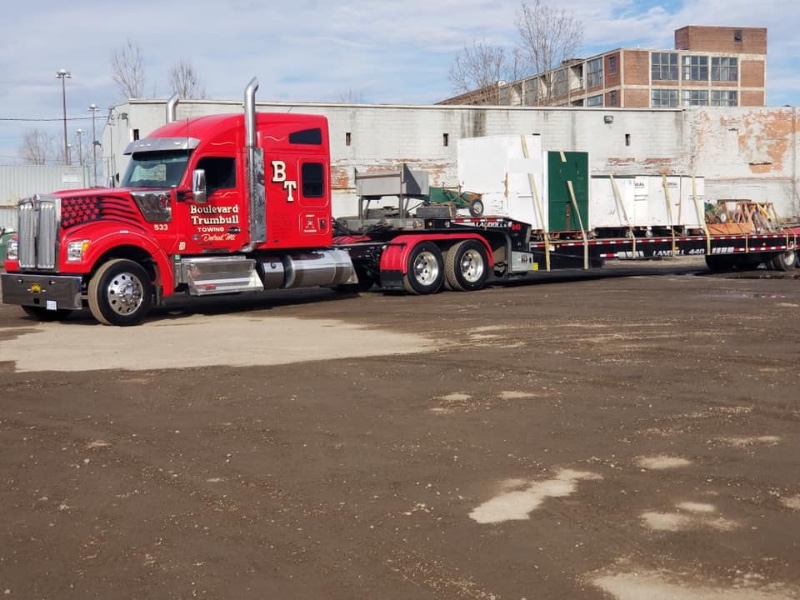
Weight Is Only One Part Of The Move
The first thing we look at is the whole scene, not just the truck. A heavy vehicle can shift, sink, lean, or bind up if the pull starts wrong. Around Metro Detroit, older yards, tight alleys, railroad crossings, low wires, and winter ruts all change the plan.
It’s easy to think: the heaviest truck needs the biggest wrecker and that is the end of it. We see it differently. A half-loaded box truck with locked brakes in a narrow lot can be harder to move than a clean semi sitting straight on pavement.
Before we tow, we check things like:
- Load position
- Axle damage
- Brake lockup
- Ground condition
- Clearance at gates and docks
- Room for the wrecker to turn
Detroit Roads Add Their Own Problems
Heavy calls around I-75, I-94, M-10, and the Lodge can get messy fast because traffic stacks up and shoulders are narrow. If a tractor loses air pressure near a ramp, we may need traffic control before we can even get near it. A bad angle on a freeway shoulder leaves no room for guessing.
Industrial areas add another layer. Some lots near old plants have patched concrete, sunken drains, and dock approaches that were built long before today’s longer trailers. We have seen trailers hung up by a few inches, and those few inches matter.
What Our Dispatch Needs To Know
A heavy transport call goes better when dispatch gets real details early. “Truck stuck” does not tell us enough. We need to know if it is loaded, if the brakes release, if anything is leaking, and if there is room for a rotator or heavy wrecker. Photos help too. For Detroit heavy transport, a quick picture of the tires, dock, road shoulder, or gate can keep the wrong truck from being sent.
That saves time, and it keeps the first move from becoming the wrong move.
When Small Mistakes Get Expensive Fast
One thing we try to explain is that forcing a heavy unit rarely helps. Drivers sometimes rock the truck back and forth, stack wood under tires, or let a forklift tug from a bad angle. Any Detroit heavy transport takes patience because the cargo changes everything. A loaded trailer does not react like an empty one. A bus, dump truck, semi, straight truck, and work truck all need a different hookup and a different path out.
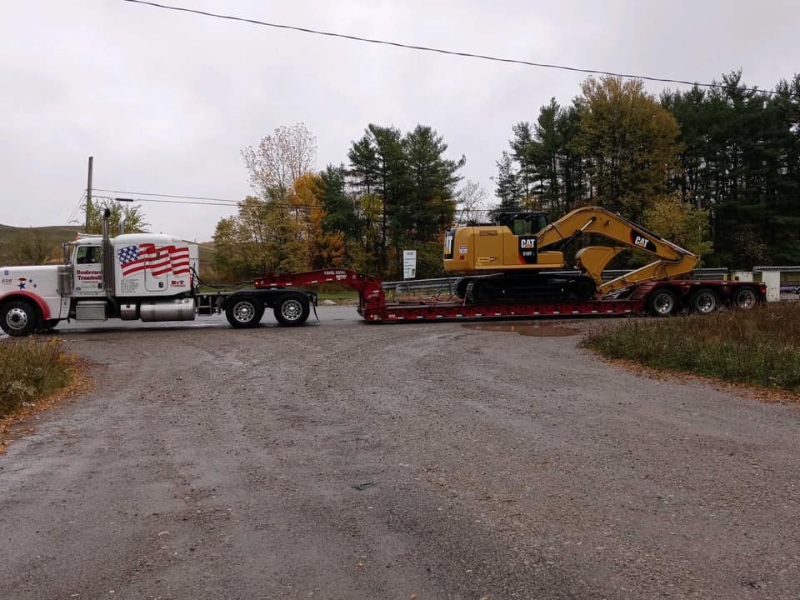
Boulevard & Trumbull: Let the Experts Handle Your Detroit Heavy Transport
At Boulevard & Trumbull Towing, we have worked Detroit heavy transport calls since 1979. We cover Wayne, Oakland, and Macomb counties with light, medium, and heavy-duty towing, roadside assistance, hoisting, crane work, and mobile rotator recovery. Our operators hold National TIM Training Certificates, and our trucks run 24/7 because breakdowns do not care about shift changes.
As a woman-owned company, we put a lot of weight on clear pricing, trained operators, and sending the right equipment the first time. Detroit heavy transport may mean a semi on I-94, a commercial truck stuck behind a Midtown building, or a recovery job near an industrial yard after freezing rain. Around here, the job usually comes down to weight, weather, space, and knowing when to slow the pull down.
FAQs
What should I tell dispatch before a heavy tow?
Share the vehicle type, load status, exact location, and any visible damage. Photos help if you can take them without standing near traffic.
Can a loaded trailer be towed?
Yes, but the operator needs to know the cargo weight and how the load is sitting. A shifted load can change the hookup plan.
Why does a heavy recovery take longer than a regular tow?
The operator has to check weight, brakes, ground condition, clearance, and traffic. Rushing can cause damage.
What if the truck is stuck at a loading dock?
Stop trying to force it out. A heavy wrecker may need to lift, pull, or reposition the unit in stages.
Can locked brakes make towing harder?
Yes. Locked brakes can drag tires, damage parts, and make the truck harder to control during the move.
Should I stay with the truck while help is coming?
Stay nearby only if it is safe. If traffic, fuel leaks, or unstable ground are involved, move away and wait for instructions.